Claude Code Alternatives: 7 Coding Agents Worth Actually Considering
 By Neo Zino - builder of ClockedCode9 min read
Claude Code alternatives compared: Cursor, Copilot, Devin Desktop, Codex CLI, Gemini CLI, Cline, and Aider - real pricing and when switching actually pays off.
Made with DispatchSEO
On this page
Most pages that rank for "claude code alternatives" are written by the alternative's own vendor - cline.bot pitching Cline, tensorlake.ai pitching OpenCode, kilo.ai pitching Kilo - which means none of them can honestly tell you when switching away from Claude Code actually pays off. The seven tools people mean by "alternative" split into four real shapes: full IDEs (Cursor, Devin Desktop), an editor extension plus CLI (GitHub Copilot), terminal agents from the other two frontier labs (Codex CLI, Gemini CLI), and open source terminal agents (Cline, Aider). I pulled every price below from each vendor's own pricing page today, not from a listicle repeating last year's numbers.
TL;DR: The seven real Claude Code alternatives are Cursor ($20/mo), GitHub Copilot ($10/mo, and its Pro tier bundles agent credit for Claude Code and Codex), Devin Desktop ($0/mo free tier), Codex CLI (bundled with ChatGPT Plus, $20/mo), Gemini CLI (free tier via a Google account, then usage-based), Cline (free BYOK or $9.99/mo ClinePass), and Aider (free, BYOK, open source). Switching makes sense if you specifically want visual, in-editor review, a multi-agent command center, or per-task model choice. If you already have a tuned Claude Code setup, none of the seven replace it outright - most people end up running one of these alongside Claude Code, not instead of it.
Most "alternatives" solve a narrower problem than Claude Code covers
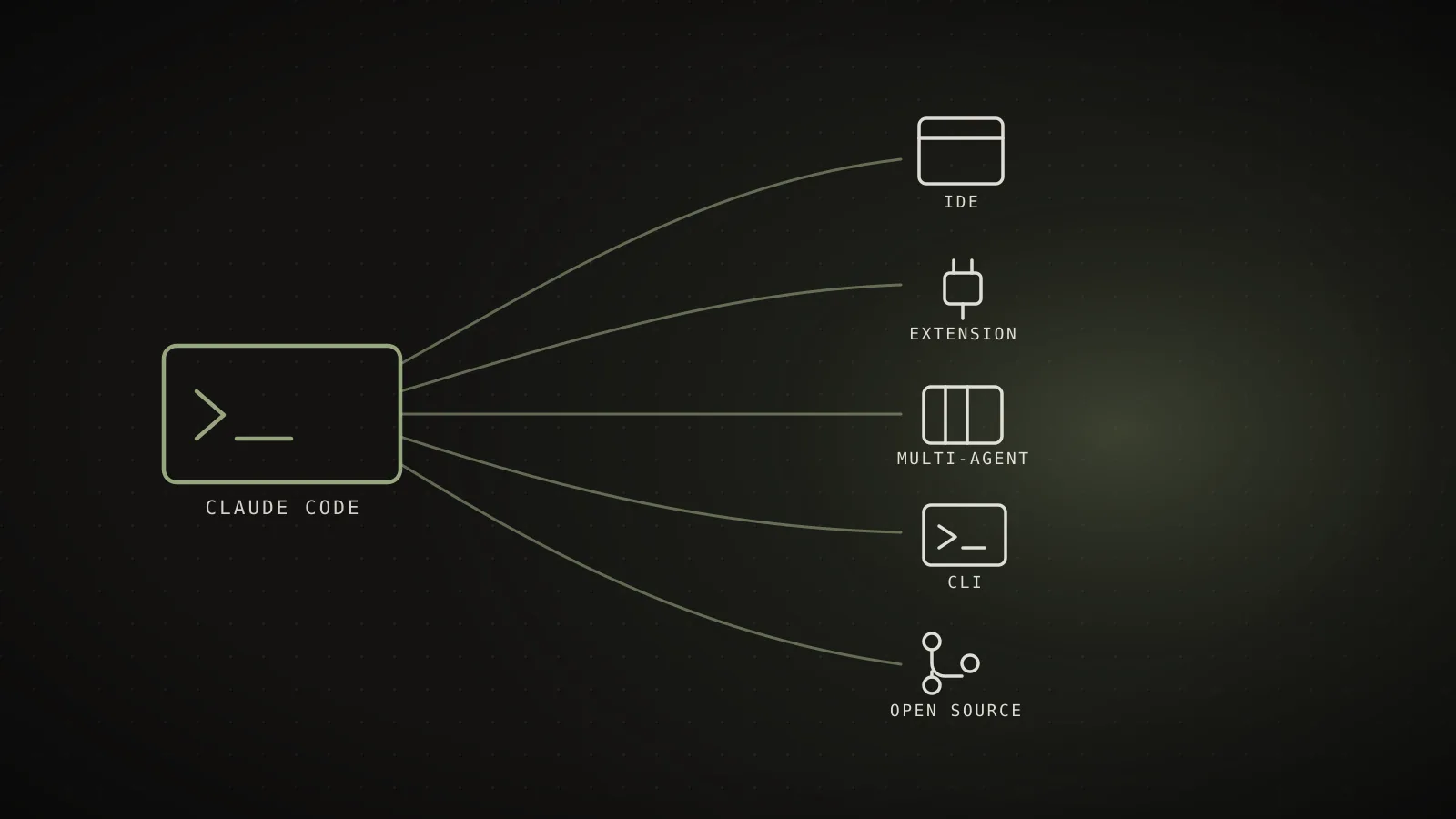
Claude Code's actual shape is a terminal agent you hand a goal to and walk away from: it reads a codebase, edits files, runs commands, and works headless in CI or a script, with an extension surface (MCP servers, subagents, skills, hooks, a persistent CLAUDE.md) that's the deepest of any coding agent today. Every tool below is a real, usable coding agent - none of them are toys - but each one trades away a piece of that shape for something else: Cursor trades headless operation for visual control, Devin Desktop trades a single deep agent for a board of several shallower ones, Cline and Aider trade the built-in ecosystem for picking your own model. Searching "claude code alternatives" because Claude Code itself is misbehaving - burning through usage too fast, MCP servers eating context - is a setup problem the usage-limits breakdown usually fixes faster than switching tools does.
The seven tools people actually mean by "alternative"
The seven, at a glance
Pricing pulled todayCursor
Full IDE (VS Code fork)
Watching every edit land in a familiar editor
$20/mo
GitHub Copilot
Editor extension + CLI
Teams already paying for GitHub's stack
$10/mo
Devin Desktop
Full IDE, multi-agent
Running several agents from one Kanban board
$0/mo
Codex CLI
Terminal agent
Fast, cheap, bounded backend tasks
ChatGPT Plus, $20/mo
Gemini CLI
Terminal agent
Google Workspace and Vertex-heavy stacks
Free tier, then usage-based
Cline
Editor + terminal, open source
Picking your own model per task, per provider
Free (BYOK) or $9.99/mo
Aider
Terminal agent, open source
Git-native pair programming, any model you point it at
Free (BYOK)
Claude Code: $17/mo (Pro, annual) - the baseline every row above is measured against.
Two of these already have a full comparison on this site if you want the deeper cut: Claude Code vs Cursor covers interface and ecosystem in detail, and Codex vs Claude Code covers the GPT-5.6 Sol vs Fable 5 benchmark split. Claude Code vs Windsurf covers Devin Desktop's Agent Command Center and the June 2026 rename most other roundups haven't caught up to yet.
Where each one genuinely wins
Cursor has the gentlest learning curve of the seven. Watching Tab predict a multi-line edit and Cmd-K rewrite a selection in place beats staring at a blank terminal prompt on day one, and its Pro plan, a confirmed $20/mo as of today, throws in a model picker across Claude, GPT, and Gemini in the same editor. Good if you want to A/B frontier models on one task without switching tools entirely.
GitHub Copilot makes the most sense for a team already living inside GitHub's stack. Its CLI ships across every tier, including the free plan, and the paid tiers add real per-model routing on top of it.
Devin Desktop's case is breadth: the Agent Client Protocol it launched with lets its Agent Command Center run Devin Local, Claude Agent, and Codex side by side on one Kanban board. Between the two full-IDE options here, its $0/mo free tier is also the only one that costs nothing to try.
Codex CLI is fast where it counts. GPT-5.6 Sol posts the best agentic benchmark numbers of any model in this roundup (88.8% on Terminal-Bench 2.1) and runs at half the per-token price of Claude Fable 5, which adds up fast if you're metered by the API instead of a flat subscription.
Gemini CLI's pitch is the price of admission: a free tier through a plain Google account gets you a working terminal agent with no card on file, before you've decided whether a paid tier is worth it at all.
Cline pairs model flexibility with a safety rail - every action needs your explicit approval before it runs - and it isn't locked to one editor, working across VS Code, JetBrains, Cursor, and Windsurf. The $9.99/mo ClinePass buys higher rate limits on popular models on top of the free bring-your-own-key path.
Aider is the git-native option: it commits every change with a sensible message on its own, maps your codebase for context, and connects to almost any model, local ones included. Of the seven, it's the closest thing to a Claude Code-style terminal loop that costs nothing but the tokens you actually burn.
Pricing across all seven, pulled today
| Tool | Entry price | Notes |
|---|---|---|
| Claude Code | $17/mo (Pro, annual) | Baseline for this table |
| Cursor | $20/mo (Pro) | Confirmed on cursor.com's own pricing page |
| GitHub Copilot | $10/mo (Pro) | Free tier exists; Pro bundles Claude Code + Codex agent credit |
| Devin Desktop | $0/mo (free tier) | Pro $20/mo, Max $200/mo |
| Codex CLI | $20/mo (ChatGPT Plus) | Free/Go plans get GPT-5.6 Terra only, not Sol |
| Gemini CLI | Free (Google account) | Then usage-based API pricing |
| Cline | Free (BYOK) or $9.99/mo | ClinePass raises rate limits on popular models |
| Aider | Free (BYOK) | Open source, no subscription tier at all |
Look closely and the table isn't really about being cheaper than Claude Code - it's about being cheaper to start. Every alternative except Codex CLI and Cursor has a genuinely free way in, and the real cost shows up later, in usage: a metered API bill or a rate-limited free tier, the same trap Claude Code's own usage limits can spring on a bloated setup.
Is switching actually worth it?
Is switching actually worth it?
Already have a tuned CLAUDE.md, hooks, and a couple of subagents earning their keep?
Want to watch every edit land in a GUI instead of reviewing a finished diff?
Task is small, well-specified, and only cost per token matters?
Landed on "stay" for at least two of three? The switch would cost more setup time than it saves.
If you landed on "stay" twice or more, an alternative isn't going to out-earn the time you'd spend rebuilding what your current setup already does. If you landed on "try elsewhere" on the visual-control or multi-agent questions, that's a real, specific reason - not FOMO from a roundup post - and worth acting on.
When these seven don't actually replace Claude Code
Neither of the two IDE-shaped tools here (Cursor, Devin Desktop) run natively headless in CI the way Claude Code does - Cursor's own docs frame its CLI/agent mode as a secondary surface, and Devin Desktop's docs don't describe an equivalent to piping Claude Code from a script. If your use case is a pipeline step, not an interactive session, that rules out the two editor-first picks regardless of how their pricing compares. And none of the seven ship anything resembling CLAUDE.md, subagents, or hooks as a combined, first-party system - Cline and Aider get closest through raw model flexibility, but you're assembling the equivalent yourself instead of getting it out of the box.
FAQ
What is the best Claude Code alternative?
There isn't a single best one - it depends on what you actually want from your workflow. Cursor is the best pick if you want to watch every edit land in a familiar editor. Devin Desktop is the best pick if you want a free tier and a command center for running several agents at once. Cline and Aider are the best picks if you want to choose your own model per task instead of being locked to one vendor.
Is Cursor better than Claude Code?
Neither wins outright - they're different shapes of tool, covered in more depth in the full Claude Code vs Cursor comparison. Cursor is a full VS Code fork built for staying visually close to every edit; Claude Code is a terminal-first agent built for long, autonomous changes you review after the fact. Cursor's $20/mo Pro plan is the closer entry price to Claude Code's $17/mo (Pro, annual) than most of the other six tools here.
Is GitHub Copilot a real alternative to Claude Code?
Partly, and its own pricing page complicates the framing: Copilot Pro at $10/mo includes third-party agent access to Claude Code and Codex, meaning Copilot is also a billing channel for Claude Code, not purely a competitor to it. Copilot's own coding agent is the actual alternative; the third-party access is a bridge, not a substitute.
What's the best free alternative to Claude Code?
Devin Desktop's $0/mo tier and Cline's bring-your-own-key mode are the two genuinely free options among these seven. Aider is also free, but bring-your-own-key like Cline means you're still paying per token to whichever model provider you point it at - free of a subscription, not free of usage cost.
Should I actually switch away from Claude Code?
Only if your workflow matches what a specific alternative does better: visual, in-editor review (Cursor), a multi-agent command center (Devin Desktop), or picking a different model per task (Cline, Aider). If you already have a tuned CLAUDE.md, working hooks, and subagents earning their keep, that setup doesn't transfer, and rebuilding it elsewhere usually costs more than the switch saves.
Try one, don't abandon the other
None of this is an argument that Claude Code is the only agent worth having installed. Cursor's visual loop, Devin Desktop's free tier, Cline's model flexibility - each is a real reason to keep a second tool around for the work it actually suits. What I'd push back on is treating a roundup written by the tool being pitched as a reason to drop Claude Code entirely, which is what most of the SERP for this exact keyword is quietly asking you to do. I still run Claude Code as the daily driver, and the tooling ClockedCode builds goes after the part none of these seven touch: a blank terminal that's already useful on day one instead of week three. Install one of the alternatives above if the reason fits. It doesn't cost you anything you've already built.